
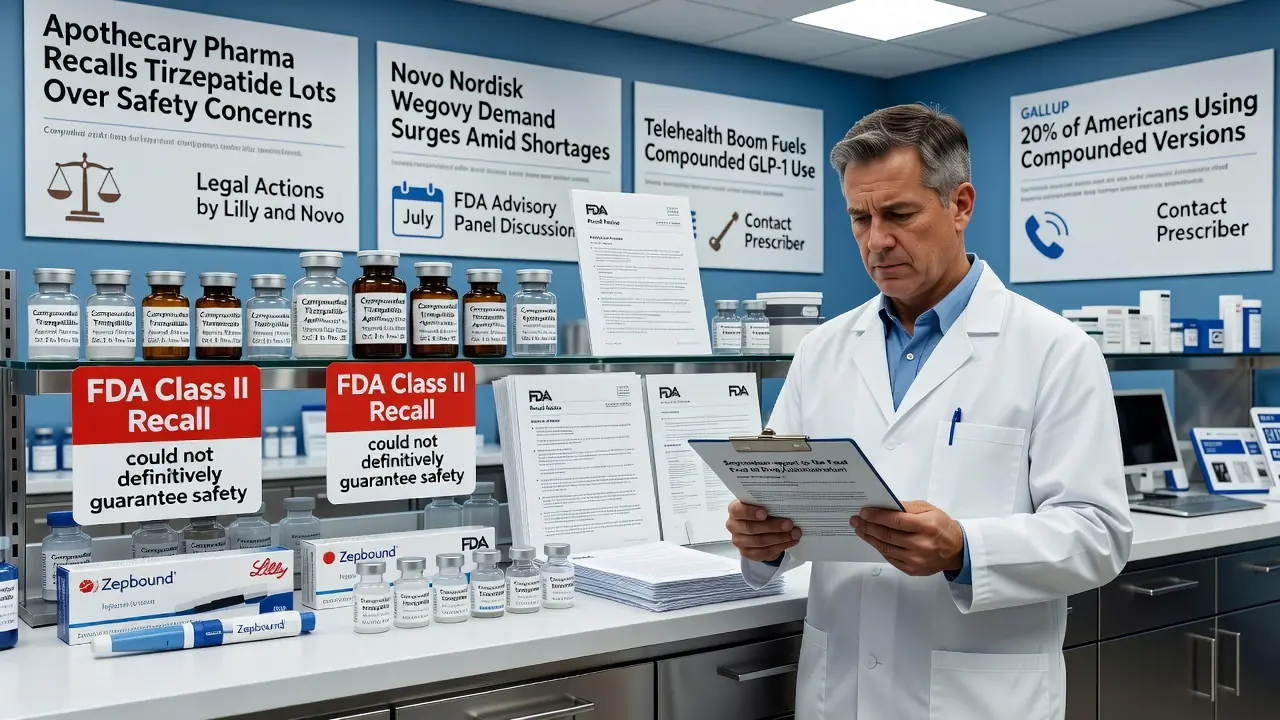
Apothecary Pharma, a compounding pharmacy, has voluntarily recalled 22 lots of its copycat tirzepatide, the active ingredient in Eli Lilly's obesity drug Zepbound. The company told regulators it could not definitively guarantee the medication's safety. The recall was reported to the Food and Drug Administration in September.
What the recall covers
The recall applies to 22 lots of compounded tirzepatide, with beyond-use dates ranging from Oct. 8 to Nov. 26. Compounded drugs are custom preparations made by pharmacies rather than manufactured and approved under the same process as branded medicines. Lilly's Zepbound is an FDA-approved product, and the compounded version is not the same product.
The FDA classified the recall as "Class II." Under agency rules, that category means use of the product may cause temporary or medically reversible health consequences, or the probability of serious harm is remote.
Why compounded versions have drawn scrutiny
Compounded forms of Zepbound and Novo's Wegovy grew rapidly as demand outpaced supply and telehealth firms offered lower-cost alternatives. Those shortages have since ended, but many firms have continued selling copycat GLP-1 medicines by individualizing treatment regimens, a practice federal law permits. A recent Gallup survey found that about 20% of Americans taking these medicines use compounded forms.
Lilly and Novo, the only makers of FDA-licensed GLP-1 obesity medications, have pursued legal action against compounders and have stated that the quality and safety of copycat versions cannot be assured. This recall may strengthen their argument that compounded products do not match approved ones in quality, safety or efficacy.
Limits of what is known
The available information does not identify specific patient harms linked to these lots, and the recall notice itself rests on the company's inability to guarantee safety rather than a confirmed defect. Patients who have a compounded tirzepatide product with one of the affected beyond-use dates should contact their prescriber or pharmacist for guidance rather than rely on general information. Broader questions about compounded peptide medicines remain unsettled, including a July FDA advisory panel's endorsement of wider use of six peptides despite limited evidence of their safety and effectiveness.